News Wire - MechE Stories from the MIT News Office 
D-Lab Scale-Ups awards funds to three MIT social entrepreneursD-Lab Scale-Ups, launched in 2011, piloted its acceleration platform for MIT alumni innovators and entrepreneurs last year. The fellowship program provides financial and mentoring support to entrepreneurs seeking to turn appropriate technologies into scalable and sustainable social ventures.
Scale-Ups fellowships are organized into three tracks for early, middle, and advanced stage projects. For the Phase I program — the earliest stage — fellows conduct in-depth needs and market analysis, value-chain analysis and user testing in their target market to further refine their existing prototype and work toward establishing a business model.
MIT Global Founders’ Skills Accelerator announces 2013 student teams
Fourteen teams will participate in this year’s MIT Global Founders’ Skills Accelerator (MIT GFSA), an international entrepreneurship program that provides student entrepreneurs with the skills and resources needed to launch successful startups. The program, held from June to September 2013 and hosted at the Martin Trust Center for MIT Entrepreneurship, will bring together eight MIT student teams and six teams from universities in Canada, China, Germany, Russia, Scotland and Turkey.
Students with toys: Not just playing around
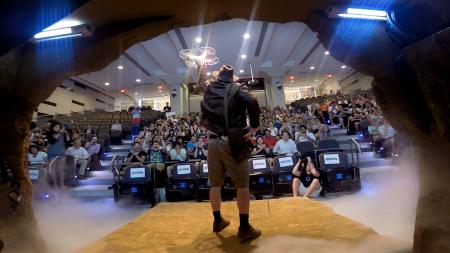
Their theme might have been “in the dark,” but the MIT students who participated in this year’s 2.00b (Toy Design), a first-year elective in mechanical engineering, were anything but: Their creations ran the gamut from innovative board games to puzzles to stuffed animals to a comforter that transformed into a pup tent.
Water purification process named 'Technology Idol of the Year'
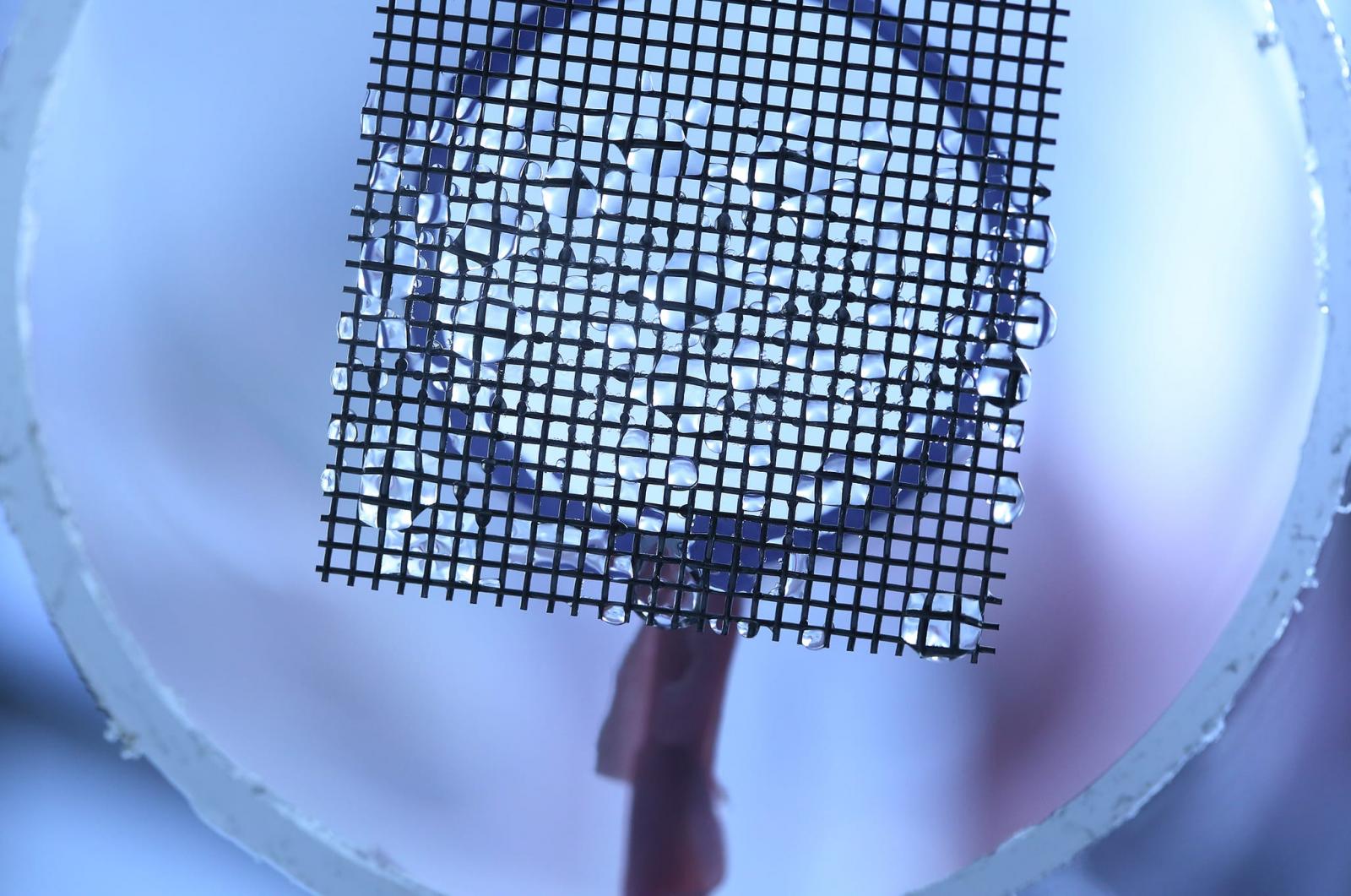
The humidification-dehumidification (HDH) carrier gas extraction process developed by Prakash Narayan and colleagues in Department of Mechanical Engineering Professor John H. Lienhard’s research group has just been named the Water Technology Idol of the Year by Global Water Intelligence (GWI) and International Desalination Association (IDA) at the 2013 Global Water Summit in Seville, Spain.
Mechanical engineering professor Joseph LeConte Smith Jr. dies at 83
Joseph LeConte Smith Jr., the Samuel C. Collins Professor Emeritus of Mechanical Engineering, died on May 7 at the age of 83.
After completing his undergraduate education in mechanical engineering at Georgia Institute of Technology, Smith served in the Signal Corps of the U.S. Army before beginning his graduate work at MIT in thermodynamics and fluid mechanics under the late Joseph H. Keenan. Starting as an instructor in MIT’s Department of Mechanical Engineering in 1956, he rose through the academic ranks to become Ford Professor of Engineering in 1991. In 1994, he was the first faculty member to hold the Samuel P. Collins Senior Faculty Chair, named after the founder of the MIT Cryogenic Engineering Laboratory, which Smith directed from 1964 until his retirement in 2008.
Smith was a consummate mechanical engineer who made innovative contributions to both education and research. In 1967, he introduced an innovative approach to undergraduate education in thermodynamics that prevails to this day. In graduate thermodynamics, he brought the thermodynamics subject introduced by Keenan, his mentor, into the 21st century.
Research update: Team observes real-time charging of a lithium-air battery
One of the most promising new kinds of battery to power electric cars is called a lithium-air battery, which could store up to four times as much energy per pound as today’s best lithium-ion batteries. But progress has been slow: The nature of the electrochemical reactions as these batteries are charged remains poorly understood.
In 2.007, slow and steady wins the race
Tim the Beaver, MIT’s mascot, is on an operating table and in need of several different medical procedures.
That scenario, a variation of the board game “Operation,” was the basis for this year’s final competition in 2.007 (Design and Manufacturing I), in which students design, build and operate small robots that compete in a variety of tricky tasks.
‘The place I needed to be’
During her free time back in high school, Madeline Salazar was often surrounded by piles of balsa wood in her house in East Los Angeles, sanding down her carefully designed bridges for engineering competitions.
Wind power — even without the wind
Offshore wind could provide abundant electricity — but as with solar energy, this power supply can be intermittent and unpredictable. But a new approach from researchers at MIT could mitigate that problem, allowing the electricity generated by floating wind farms to be stored and then used, on demand, whenever it’s needed.
A blueprint for reversible wrinkling in composite materials
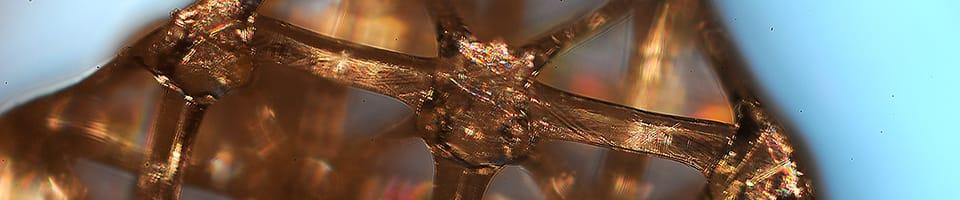
Many natural composite materials have evolved to wrinkle in response to certain stimuli: The eye of the squid is lined with wavy layers of silvery reflectors that give it a silvery sheen. In the cell walls of many plants, wrinkles allow expansion without strain. Finally, the inner lining of arteries contain wrinkled lamellae that can be indicators of coronary heart disease, and can serve as markers for the condition.