Nature Electronics Commentary: The potential of miniaturized ingestible electronics
Ingestible electronics are small devices that can pass through the gastrointestinal tract to perform diagnostic procedures and therapeutic interventions. Early forms of these devices have been around since the 1950s, but the field has evolved rapidly over the past two decades.
Today, the field is facing a decision as to where development focus should turn next. One path involves developing occasionally used diagnostic tools for imaging, sampling and biochemical sensing; the other involves developing frequently deployed microelectronic systems that can track health, communicate to the patient and clinicians, and deliver therapy.
In a Comment article for the journal Nature Electronics, Giovanni Traverso, Karl Van Tassel (1925) Career Development Professor and associate professor of mechanical engineering; Paul Sheehan from the Advanced Research Projects Agency for Health (ARPA-H); Tahmad Bahai, Chief Technology Officer for Texas Instruments; Robert Langer, MIT Institute Professor; and Anantha Chandrakasan, MIT Provost and the Vannevar Bush Professor of Electrical Engineering and Computer Science, present the case for more frequently deployed systems.
A Comment, which the journal indicates is similar to an op-ed, invites expert perspectives on matters of public or scientific importance. The paper, “The potential of miniaturized ingestible electronics,” is available via the Nature Electronics website.
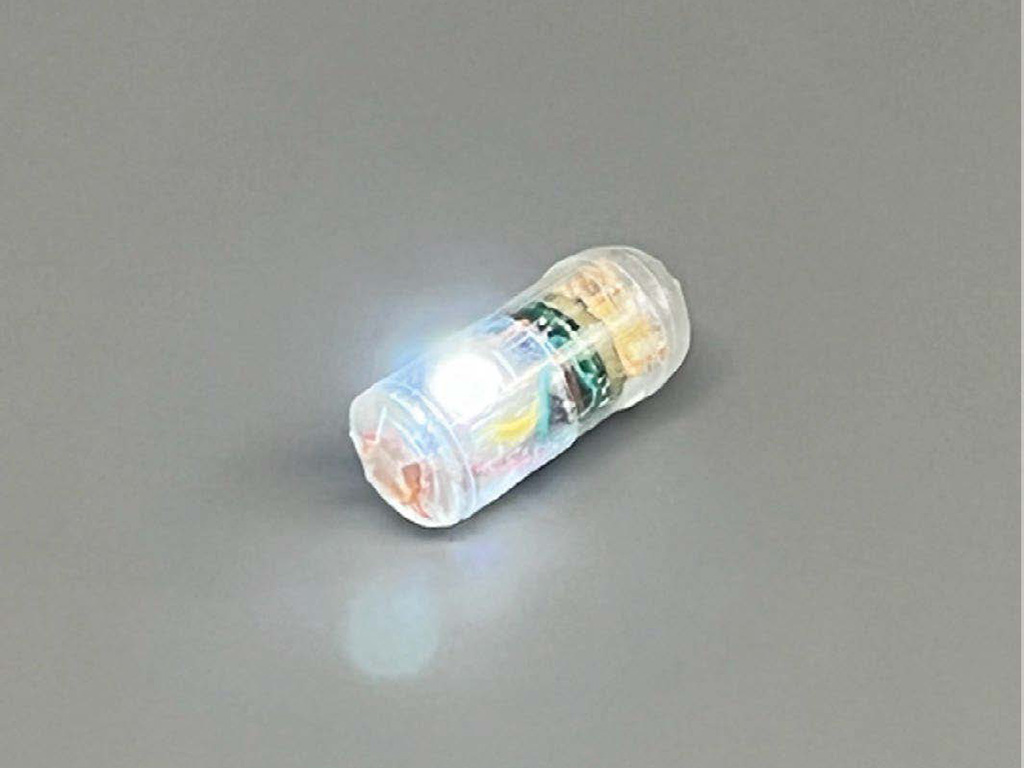 An ingestible electronic device that measures 11 mm in diameter and 26 mm in length. Courtesy of the researchers.