FIREFLI uses light to sense poor blood supply in body tissue, can provide earlier diagnosis for Acute Mesenteric Ischemia
Bioinspired ingestible capsule offers less invasive approach and can provide an earlier diagnosis for the deadly condition
Acute Mesenteric Ischemia (AMI), a condition where the blood supply to the intestines is reduced or blocked, can lead to tissue damage or even death if not treated promptly. Thousands of people are affected each year, with the prognosis depended on both the severity of the condition and the speed at which it can be addressed. If treated promptly, the survival rate is around 70-80 percent but, if treatment is delayed, the survival rate can drop significantly.
One of the key challenges that doctors face in addressing the condition is that systems are often vague and can mimic common gastrointestinal conditions. Current diagnostic methods, such as CT and mesenteric angiography, are complex, costly, and invasive. A new approach introduced by researchers from MIT and Brigham and Women’s Hospital, provides a noninvasive, real-time diagnostic solution.
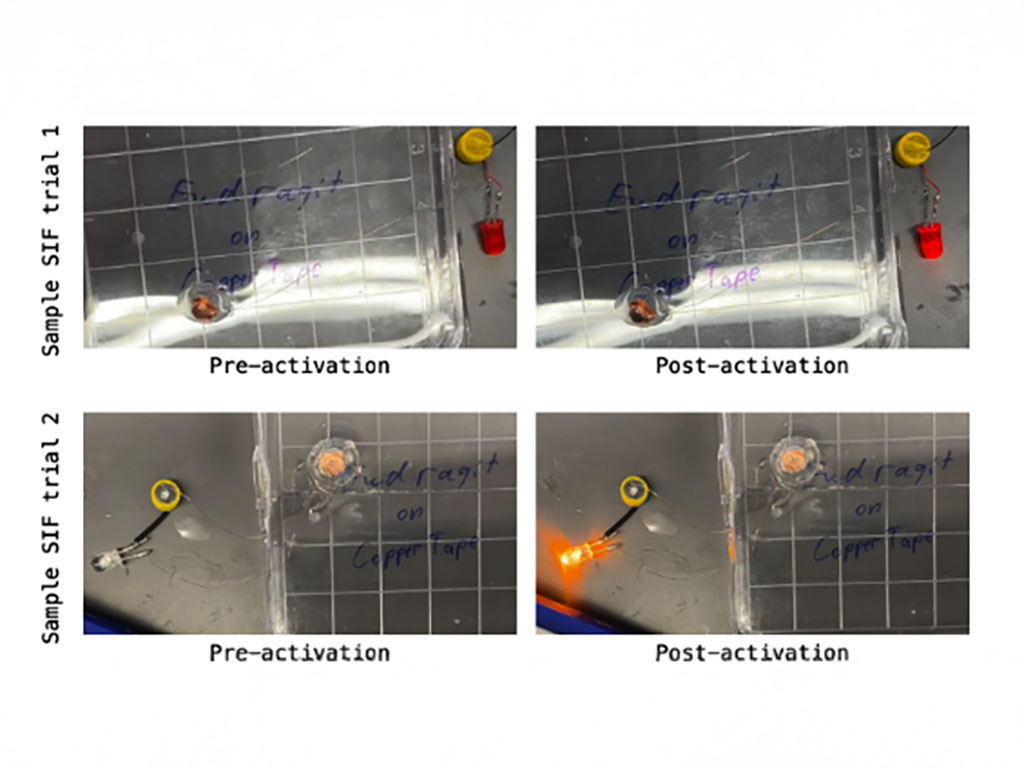
The bioinspired, ingestible capsule, dubbed FIREFLI (Finding Ischemia via Reflectance of LIght), uses light to sense tissue with evidence of poor blood supply.
“FIREFLI has the potential to facilitate earlier detection and treatment of AMI, ultimately improving patient outcomes,” says Jack Chen, a doctoral student at MIT in the Laboratory for Translational Engineering (L4TE) and first author on a new paper presenting the work.
Once swallowed, the device activates in the small intestine’s pH environment, emitting pulses from LEDs then measuring reflected light across 10 wavelengths. The capsule then computes tissue luminance biomarkers, processes a diagnosis, then wirelessly transmits information to an external mobile device.
L4TE conducts interdisciplinary work in materials science, medical device development, sensing, drug formulation, and drug delivery. The lab is headed by Giovanni Traverso, the Karl Van Tassel (1925) Career Development Professor, associate professor of mechanical engineering, and a gastroenterologist at Brigham and Women’s Hospital, who is one of the authors of the new study.
The paper, “An Ingestible Capsule for Luminance-Based Diagnosis of Mesenteric Ischemia" is available now in the journal Science Robotics.