
MIT announces 2025 Bose Grants
A membrane to capture bubbling methane, a bold new way to search for dark matter in our Solar System, a hand-held MRI device and a light-based technique to correct a brain-based vision disorder are the outstanding projects that will receive this year’s Professor Amar G. Bose Research Grants.
This year’s recipients are Picower Professor of Neuroscience Mark Bear, Cecil H. Green Professor in Electrical Engineering Jacob White, Professor of Electrical Engineering and Computer Science Elfar Adalsteinsson, Mechanical Engineering Professor Kripa Varanasi, Civil & Environmental Engineering Associate Professor Desirée Plata, Professor of Physics and Germeshausen Professor of the History of Science David Kaiser, and Thomas A. Frank Professor of Physics Peter Fisher.
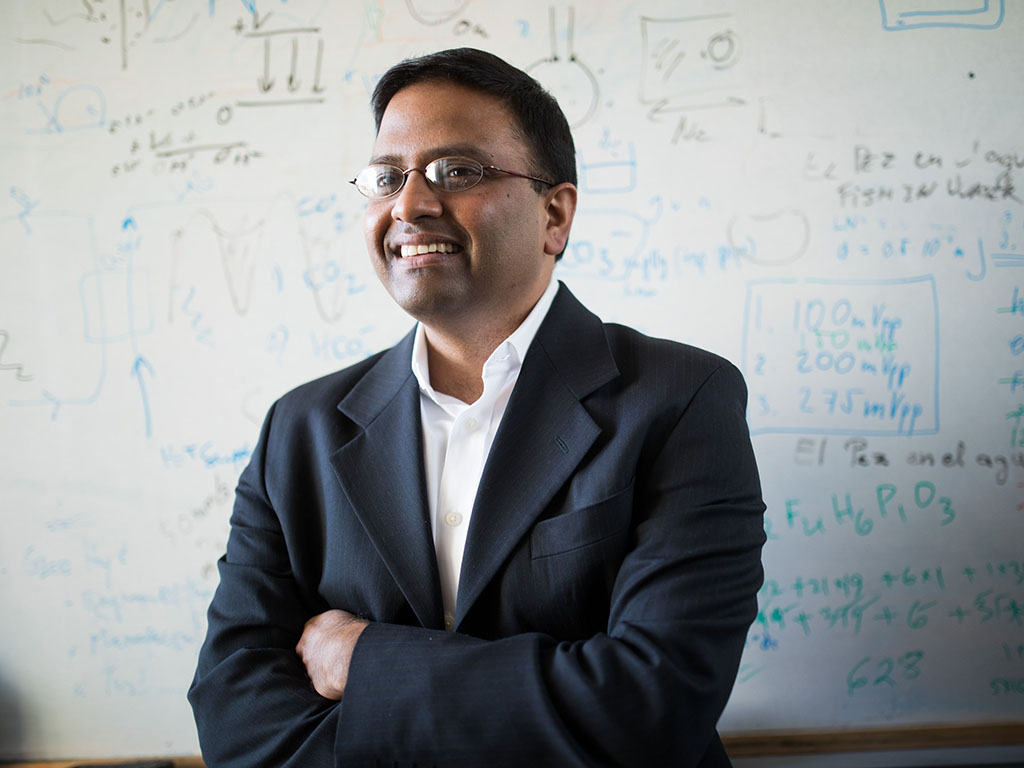 Mechanical Engineering Professor Kripa Varanasi is a recipient of the 2025 Bose Grant. Credit: Bryce Vickmark
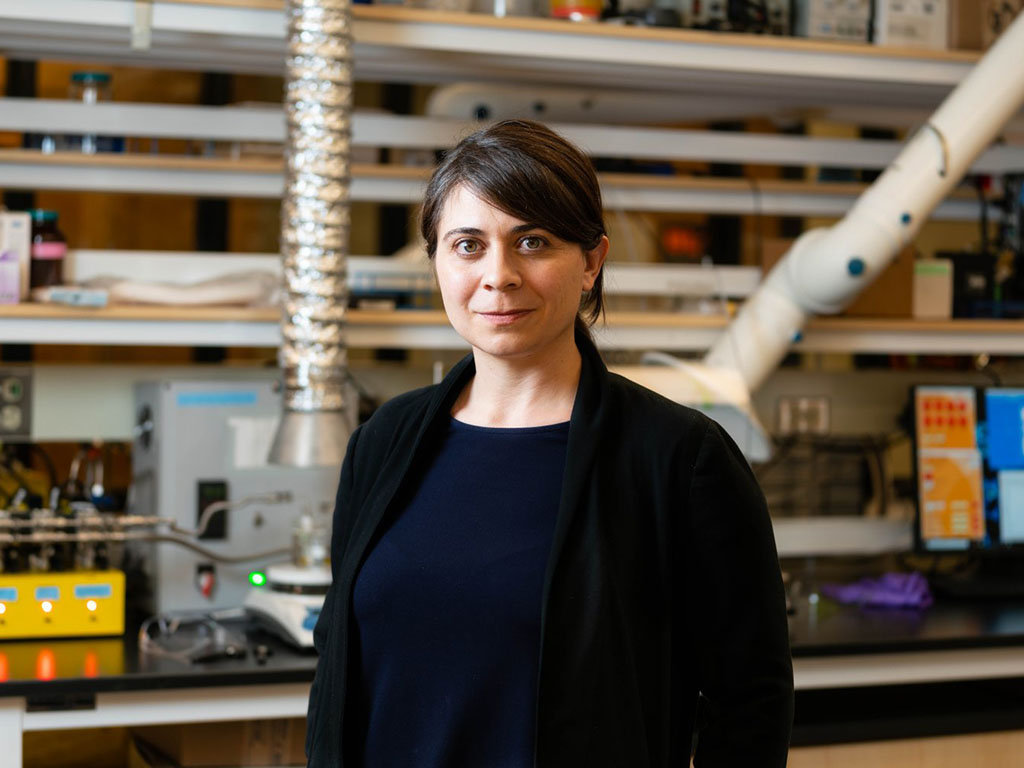 Civil & Environmental Engineering Associate Professor Desirée Plata is a recipient of the 2025 Bose Grant. Credit: MIT News
The program was named for the visionary founder of the Bose Corp. and MIT alumnus, Amar G. Bose ’51, SM ’52, ScD ’56. After gaining admission to MIT, Bose became a top math student and a Fulbright Scholarship recipient. He spent 46 years as a professor at MIT, led innovations in sound design, and founded the Bose Corp. in 1964. MIT launched the Bose grant program 11 years ago to provide funding over a three-year period to MIT faculty who propose original, cross-disciplinary, and often risky research projects that would likely not be funded by conventional sources.
“These talented faculty members are taking on big, bold research questions in their quest to enhance our understanding of the universe, improve the health of people around the globe, and protect our planet’s future,” says MIT Provost Anantha Chandrakasan. “The Bose Fellowship gives them the freedom to explore innovative solutions to these multidisciplinary problems.”
Dark Matter Detectives
In the past 50 years, more than $1 billion has been invested worldwide in the search for elementary particles that could play the role of dark matter. Yet despite remarkable improvements in technology and experimental design over this time, the quest has come up short.
While the sources and properties of dark matter in our universe remain frustratingly elusive, an old idea has been circulating again among cosmologists and physicists. What if very tiny black holes, formed just after the Big Bang, could account for this mysterious dark matter?
David Kaiser and Peter Fisher suggest that primordial black holes (PBHs), each about the mass of an asteroid but the size of a hydrogen atom, could be passing through our inner Solar System. They want to search for these PBHs with a combination of high-precision tracking of Solar System objects and custom-designed spacecraft that would detect small perturbations in these objects and look for particles emitted by PBHs.
Along with their potential links to dark matters, PBHs are “fascinating astrophysical objects in their own right, which could provide insight into major open questions in cosmic history as well as semiclassical quantum gravity,” the researchers say.
Hand-held MRI
Magnetic resonance imaging can image soft tissue safely and accurately, but the equipment to do so is expensive and bulky. These factors have kept MR imaging out of the primary care clinic. Now, Jacob White and Elfar Adalsteinsson are developing a hand-held MR scanner that will cost less than $1000.
Their scanner will produce axial images of tissue in a small-diameter thin slice—like the cross-section of an arm or a leg, for instance. With this equipment, primary care physicians could hunt for regions of interest in tissue in the same way they might use a stethoscope to listen the heart and lungs or an ultrasound wand to check on fetal health.
The overall goal would be to bring MR-based diagnostic and assessment capabilities to a broader group of clinicians who might otherwise have to refer their patients to imaging specialists before treatment can begin.
With support from Bose, White and Adalsteinsson will build a platform that can be “used, manufactured, improved or adapted anywhere, and help make MR imaging a worldwide, rather than an exclusively first-world, health technology,” they say.
Capturing Methane
Even though methane emissions will be responsible for nearly half of the world’s warming over the next 20 years, less than 5% of all climate financing goes to methane and other non-carbon dioxide greenhouse gas technologies.
A flexible membrane that captures methane gas bubbles escaping from rivers, lakes, wetlands and oceans offers a route to sequestering this potent greenhouse gas and lowering the rate of climate warming within decades, according to Kripa Varanasi and Desirée Plata.
The researchers are joining forces in this effort to build a membrane that both captures and recovers the underwater gas to use as an economically vital fuel stock. If these membranes could reduce methane emissions by only 190 million metric tons per year—an achievable goal—this technology could save 0.5 degrees Celsius of warming by 2100, they note.
“It seems impossible for a single technology to bend the curve of accumulating methane in the atmosphere, but that is exactly the bold vision what we seek to realize,” say Varanasi and Plata.
Flickers of Hope
What we sense in our early months of life helps to fine-tune and optimize our neural circuitry. Unfortunately, these circuits become less malleable as we mature, making it difficult to recover from brain diseases or the adverse effects of early experiences as an adult.
Mark Bear has dedicated his career to finding ways to restore this youthful plasticity in cases of brain-based visual disorders. One of his studies with adult mice yielded a result “that seems so outlandish it can hardly be true,” he says.
He and his colleagues show that brief doses of flickering light, delivered at the specific frequency of 40 Hz to adult mice, sends the neural circuitry in their visual cortex back into a juvenile, plastic state that allows them to recover from long-term deprivation amblyopia, a severe impairment of binocular vision.
With this remarkable success in mice, the time is right to test this noninvasive and safe treatment in people, says Bear. With the Bose support, he and colleagues across MIT want to develop a headset that allows people to watch engaging video as they receive full-field light stimulation, testing its effects in a small clinical trial.