Quiet Standing and Balance Control
In a pair of papers, MIT Newman Lab researchers use control theory and computational modeling to better understand human balance and inform rehabilitation strategies
Falls, a typical consequence of loss of balance, are the leading cause of traumatic brain injuries worldwide and cost the U.S. healthcare system billions of dollars annually. For stroke survivors, amputees, people with Parkinson's disease, and older adults, the stakes are high. Yet, despite decades of research, scientists still haven’t found a common agreement on how our brains and muscles solve the problem of standing upright.
“People stand dozens of times a day without giving it a second thought. But what seems like a simple act is actually an intricate neuromotor balancing process that isn’t yet well understood by science,” explains Federico Tessari, a senior postdoctoral associate in The Eric P. and Evelyn E. Newman Laboratory for Biomechanics and Human Rehabilitation. “While standing quietly seems effortless, it actually represents a complex motor control problem the brain needs to solve.”
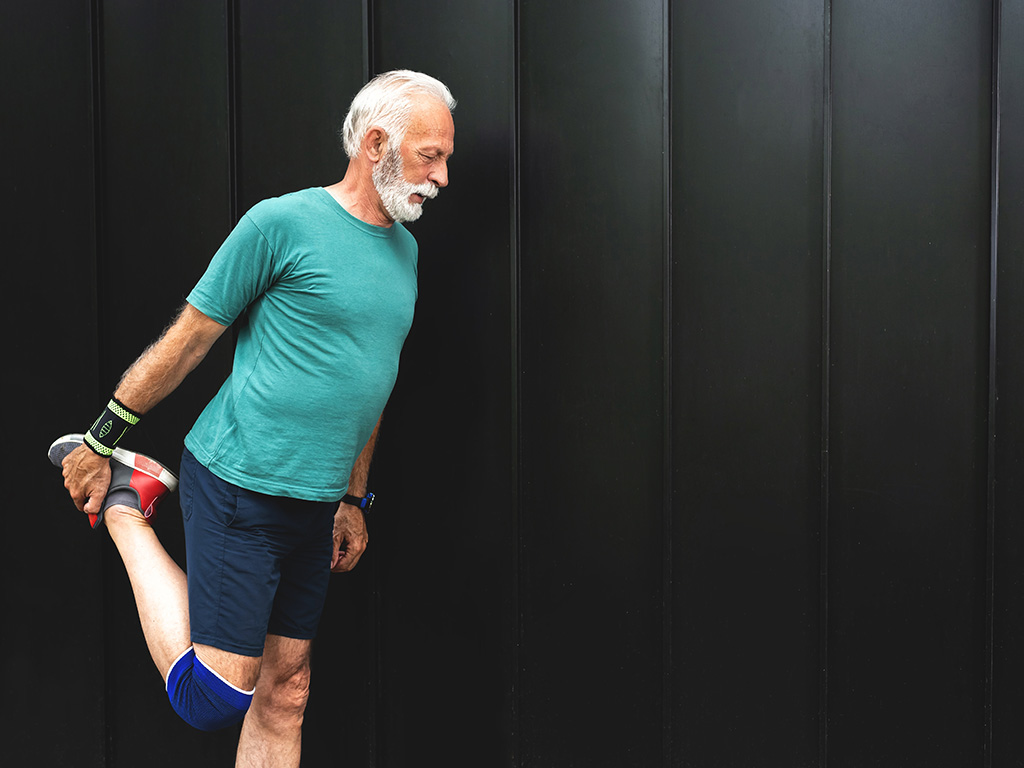 A man balances on one leg. Credit: Adobe Stock
Tessari is one of the authors of a new analysis of the neuromuscular control of postural balance that reveals why standing is so challenging to model and why getting it right matters. “By bringing together insights from neuroscience, biomechanics, and control theory, we're providing a roadmap for understanding the underlying control mechanisms behind human posture and balance,” he says.
The research, led by Kaymie Shiozawa ’19, SM ’21, PhD ‘25, Tessari, graduate student Rika Sugimoto-Dimitrova, and Professor Neville Hogan, the Sun Jae Professor in Mechanical Engineering, synthesizes 213 research papers to propose the first unified framework explaining quiet standing. Their paper, Quiet Standing: A Simple Motor Task but a Hard Modeling Challenge, is published in the IOPScience journal Progress in Biomedical Engineering.
“We reviewed decades of research and highlighted several unresolved challenges, including ongoing debates about how the nervous system controls balance and how computational models can be used to better understand human movement,” says Shiozawa.
The framework opens doors to practical innovations like smarter assistive robotics and exoskeletons that can better support people with balance disorders; personalized fall-risk prediction tools that could identify vulnerable individuals before injury occurs; and improved rehabilitation strategies for patients recovering from stroke or managing Parkinson's disease.
A second paper, Foot–ground force quantifies impaired balance control mechanisms post-stroke, by Shiozawa, Sugimoto-Dimitrova, Hogan, and Kreg Gruben of the University of Wisconsin-Madison, published in the journal Nature Scientific Reports, builds directly on the initial work to address one of the gaps the team identified.
“We used control and modeling to uncover how people who have experienced a stroke control their balance differently from unimpaired similarly-aged adults,” explains Shiozawa.
The researchers combined experimental measurements with a computational model of standing balance to provide one of the first quantitative characterizations of the underlying balance control strategies used after stroke. “We found that the affected, or ‘paretic,’ limb exhibited a substantially altered joint-torque coordination strategy, while the nominally-unaffected limb showed increased reliance on neural feedback, suggesting a compensatory role.”
Their findings demonstrate how computational models can reveal clinically meaningful aspects of motor control that are not captured by traditional assessments. More broadly, this work provides some of the first mechanistic insights into how balance is controlled following stroke and highlights the potential for model-based approaches to guide the development of more targeted rehabilitation strategies.
“To our knowledge, it is one of the first studies to use computational modeling of quiet stance to quantify distinct balance control strategies after stroke,” says Shiozawa.
Together, the two papers provide both a field-level perspective and a concrete research advance: the review outlines where balance modeling stands and what challenges remain, while the research article shows how these models can begin to reveal clinically meaningful mechanisms of impaired balance after stroke.