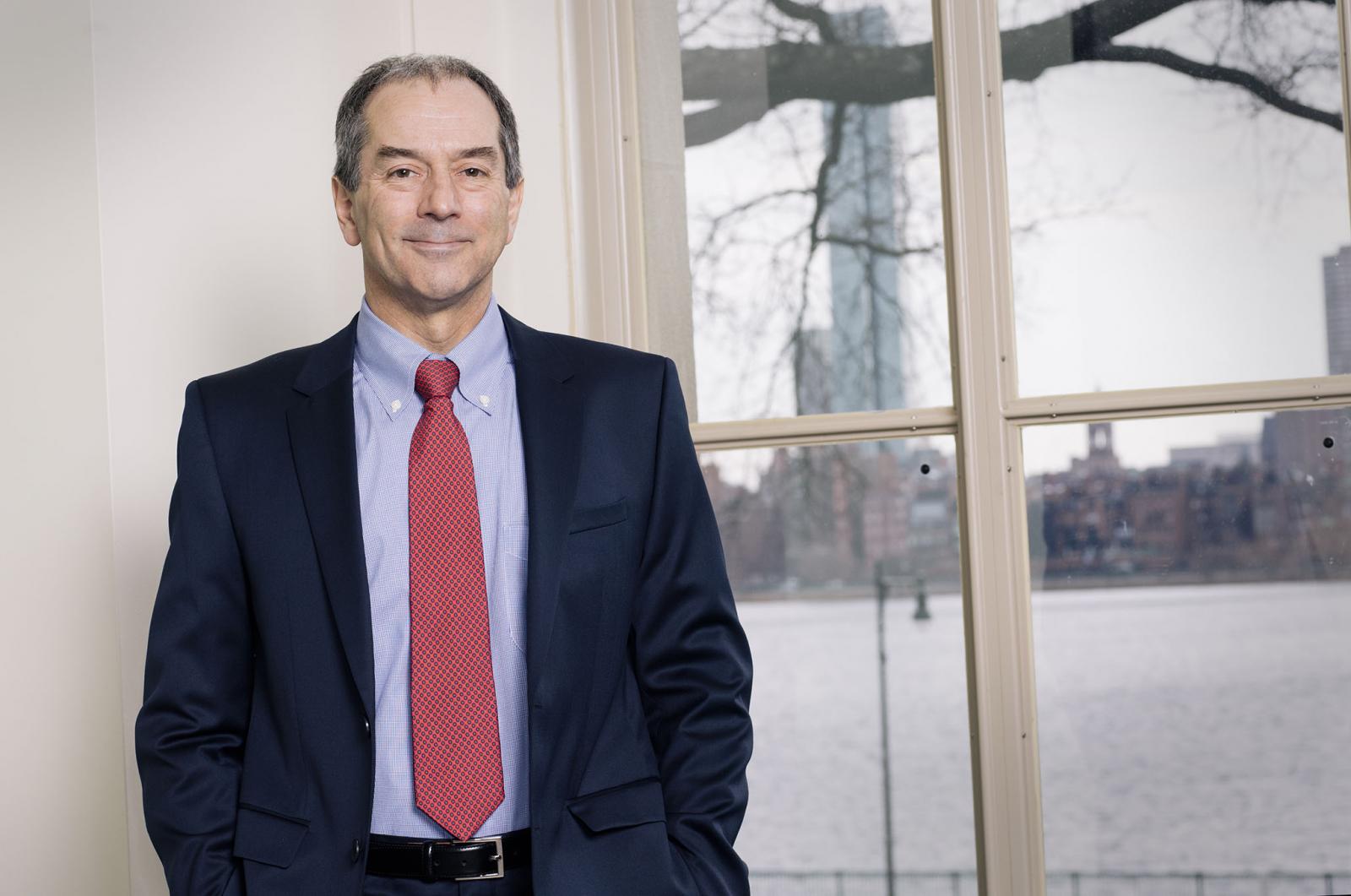
Director, J-WAFS / Professor
John Lienhard
Abdul Latif Jameel World Water and Food Security Professor
Interests
- Desalination
- Thermodynamics
- Heat and Mass Transfer
Professor Lienhard News + Media
MIT research on seawater surface tension becomes international guideline
Research on the surface tension of seawater by Professor John Lienhard and Kishor Nayar SM ’14, PhD ’19 has been recognized as a guideline by the International Association for the Properties of Water and Steam.
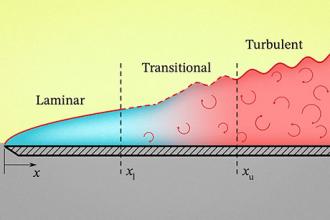
Understanding how fluids heat or cool surfaces
A new study by Professor John Lienhard shows that textbook formulas for describing heat flow characteristics, which are crucial in many industries, are oversimplified.
Simple, solar-powered water desalination
A passive solar-powered desalination system developed by Professor Evelyn Wang and Professor John Lienhard achieves a new level of efficiency in harnessing sunlight to make fresh potable water from seawater.
Faculty Details
Education
-
1982
UNIVERSITY OF CALIFORNIA, LOS ANGELES, Dept. Chemical, Nuclear, and Thermal Engineering
BS in Thermal Engineering -
1984
UNIVERSITY OF CALIFORNIA, LOS ANGELES, Dept. Chemical, Nuclear, and Thermal Engineering
MS, Heat and Mass Transfer -
1988
UNIVERSITY OF CALIFORNIA, SAN DIEGO, Dept. Applied Mechanics and Engineering Sciences
PhD, Fluid Dynamics
Research Interests
The activities of our research group are in the broad area of heat and mass transfer, thermodynamics, and fluid dynamics. Our focus is on technologies for desalination of seawater and brackish water, recycling of water, and treatment of and resource recovery from waste waters, with increased energy efficiency and reduced environmental impact as core objectives. This work includes thermodynamic cycle analysis, transport processes in components, solar-energy driven systems, and both thermal and membrane separations.
Past activities in our lab have included: convection and fluid dynamics in liquid jet impingement; high heat flux engineering; thermally stratified turbulent flow and instrumentation; electronics thermal management; and thermally driven instabilities.
Bio
John H. Lienhard V is the Abdul Latif Jameel Professor and the founding Director of the Abdul Latif Jameel Water and Food Systems Lab at MIT (J-WAFS). During more than three decades on the MIT faculty, Lienhard’s research and educational efforts have focused on heat and mass transfer, water purification and desalination, and thermodynamics. He has also filled a number of administrative roles at MIT.
Lienhard’s research on water purification has spanned a wide range of technologies for desalination and waste brine management, with a focus on energy efficiency and environmental protection. Lienhard has directly supervised more than 100 graduate theses and postdoctoral associates and is author of more than 300 peer-reviewed publications. He has been issued 40 US patents, most of which have been commercialized through start-up companies.
Lienhard is a Fellow of the American Society of Mechanical Engineers (ASME), a Fellow of the American Association for the Advancement of Science (AAAS), and a Fellow of the American Society of Thermal and Fluid Engineers (ASTFE). He is a recipient of the 1988 National Science Foundation Presidential Young Investigator Award, the 1992 SAE Teetor Award, a 1997 R&D 100 Award, the 2012 ASME Technical Communities Globalization Medal, the 2015 ASME Heat Transfer Memorial Award, the 2019 ASME Edward F. Obert Award, and the 2021 AIChE/ASME Donald Q. Kern Award.
Online Data
 https://orcid.org/0000-0002-2901-0638
Honors + Awards
Selected Examples
- 2023, Distinguished Alumnus of the Mechanical and Aerospace Engineering Department at UC San Diego
- 2022, AIChE/ASME 2021 Donald Q. Kern Award
- 2021, Elected Fellow of the American Society of Thermal and Fluid Engineers
- 2019, ASME Edward F. Obert Award for outstanding paper on thermodynamics presented during the preceding two calendar years
- 2018, Chief Guest (commencement speaker), Indian Institute of Technology Ropar, 7ᵗʰ Convocation
- 2018, Elected Fellow of the American Association for the Advancement of Science
- 2018, Committed to Caring Award (for graduate advising), MIT Office of Graduate Education
- 2016, John R. Freeman Lecturer, Boston Society of Civil Engineers
- 2015, ASME Heat Transfer Memorial Award
- 2015, Southwest Mechanics Lecturer
- 2014, Abdul Latif Jameel Chaired Professorship
- 2012, ASME Technical Communities Globalization Medal
- 2011-2017, Thirteen best paper/poster/presentation awards to our group (national & international conferences, journals)
- 2008-2014, Samuel C. Collins Chaired Professorship
- 2003, Den Hartog Distinguished Educator Award, MIT
- 2000, Fellow of ASME
- 1999, Carl R. Soderberg Distinguished Service Award, MIT
- 1997, R&D 100 Award
- 1994, Graduate Student Council Teaching Award, MIT
- 1993, Ruth and Joel Spira Teaching Award, MIT School of Engineering
- 1992, Ralph R. Teetor Award, Society of Automotive Engineers
- 1991, Best Paper Award, 26th ASME/AIChE National Heat Transfer Conference
- 1988-1991, Hatsopolous Professor
- 1988, Presidential Young Investigator Award, US National Science Foundation
Memberships
- American Society of Mechanical Engineers, Fellow
- American Association for the Advancement of Science, Fellow
- American Society of Thermal and Fluid Engineers, Fellow
- International Desalination Association, Board of Directors
- Registered Professional Engineer (Mechanical), Massachusetts and Vermont
- Scientific Council of the International Centre for Heat and Mass Transfer
- Tau Beta Pi
- Sigma Xi
Professional Service
Selected Examples
- International Desalination Association, Board of Directors: 2019-present
- UAE Water Aid Foundation (Suqia), Advisory Board: 2016-2019
- World Economic Forum, Global Future Council on Food Security and Agriculture: 2016-2018
- Editorial Board, Desalination: October 2011-present
- Editorial Board, International Journal of Thermal Sciences: August 2010-present
- Editorial Board, Frontiers in Heat and Mass Transfer: April 2010-present
- Editorial Board, Desalination and Water Treatment: January 2009-present
- Editorial Board, Journal of Heat Transfer: 2003 - 2006
- Editorial Board, Experimental Heat Transfer: March 1995 - present
- State Implementation Plan Steering Cmt. for Air Quality, Massachusetts DEP: August 1994 - May 2017 (Air quality)
MIT Service
Selected Examples (from more than 100 items)
- Founding Director, Abdul Latif Jameel Water and Food Systems Laboratory, May 2014-present (J-WAFS)
- Founding Director, Ibn Khaldun Fellowship For Saudi Arabian Women, Nov. 2009-Sept. 2017 (IBK)
- Founding Director, Center for Clean Water and Clean Energy at MIT and KFUPM, June 2008-Oct. 2017
- Associate Department Head (Education), Department of Mechanical Engineering: July 2008-April 2012
- Undergraduate Officer, Department of Mechanical Engineering: July 2005 - April 2012
- ABET Accreditation Coordinator of ME Department: July 2005 - June 2008
- Head, Division of Fluids, Energy, and Transport: August 2001 - July 2005
- Chairman, ME Faculty Hiring Committee: August 2001 - July 2005
- Chairman, ME Strategic Planning Committee: September 1997 - July 2000
- Director, Rohsenow Kendall Heat Transfer Laboratory: July 1997 - present (RK Lab)
- Joined MIT Faculty: January 1988
Teaching
- Heat and Mass Transfer (2.51, 2.55)
- Desalination (2.500)
- Modeling and Approximation in Thermal Systems (2.52)
- Free electronic textbook: A Heat Transfer Textbook, Fifth Edition
- Instrumentation textbook: Mechanical Measurements, Sixth Edition
- Thermal modeling textbook: Modeling and Approximation in Heat Transfer